Flova AI has handed out $20,000 in prizes for its Seedance 2.5 Creative Challenge, and the winning work shows exactly what the pipeline can do
Flova AI's $20,000 Creative Challenge built around Seedance 2.5 has concluded, with a cafeteria backflip short taking the top $10,000 prize. The shortlist doubles as a live catalogue of what Script to Video and multi-reference workflows actually produce in real hands.
Flova AI has wrapped its Seedance 2.5 Creative Challenge with $20,000 in cash distributed across six award categories, and the winning entries are worth studying as a practical benchmark. This was not a developer showcase or a model-provider stress test. Every submission came from working creators using the platform's own Script to Video skill and multi-reference tools, which means the output represents what paying users can actually reproduce today.
The Best Film Award, worth $10,000, went to @Just_sharon7 for a cinematic Korean high-school cafeteria scene built entirely in Seedance 2.5. The prompt she published is detailed enough to be instructive: a 22-second continuous shot, photoreal live-action at 24fps, shallow-to-medium depth of field, natural fluorescent lighting mixed with window daylight, and a specific colour grade. The result is the kind of footage that, two years ago, would have required a location, a DP and a stunt coordinator. Now it required a well-constructed prompt and a clear visual intention. That is not a small shift.
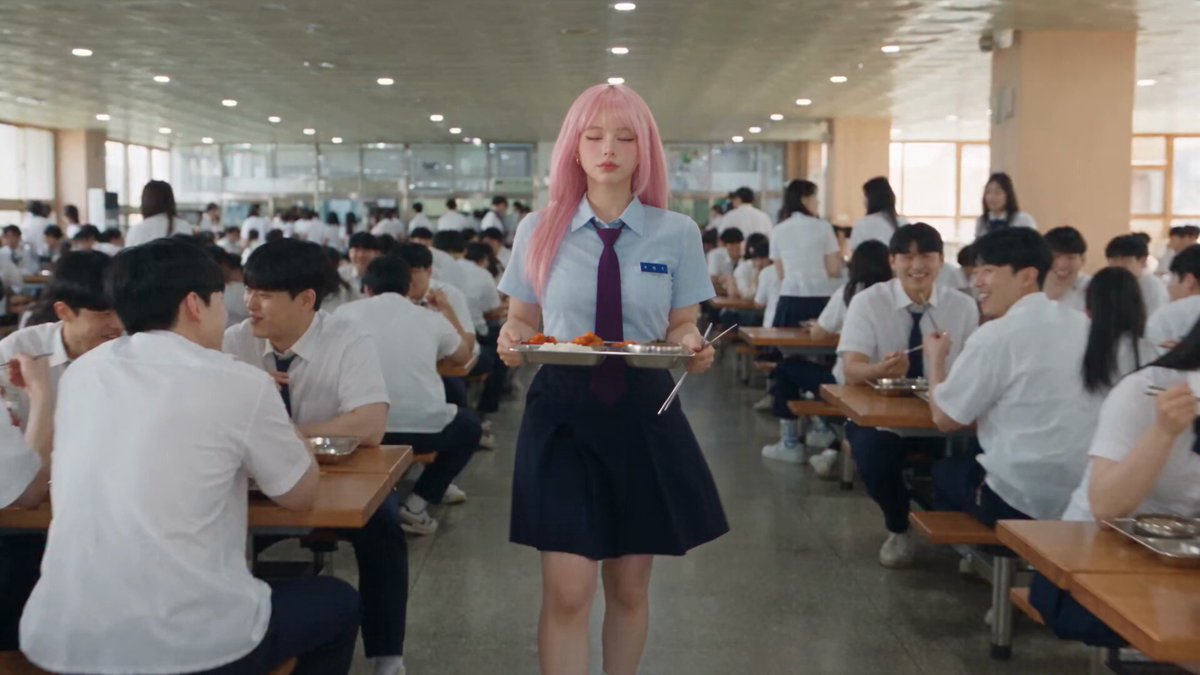
What was awarded and why it matters
The full prize breakdown, per @Flovaai:
- Best Film Award, $10,000: @Just_sharon7
- 4K Visual Impact Award, $3,000 each: @apilpirman and @pedro_dolcefoto
- Multi-Reference / 3D Creation Award, $2,000: @chessunyan
- Creative Storytelling Award, $1,000 each: @raedrebel and @multiversematrix
- Excellence Awards: ten additional creators each receive 10,000 Flova credits plus six months of VIP membership
The 4K Visual Impact category is the one to note. Two separate creators won, suggesting the judges were rewarding technical output quality rather than narrative ambition. That points toward Seedance 2.5's resolution ceiling as a genuine differentiator, not just a spec on a features page.
The Multi-Reference / 3D Creation Award is also significant in context. @Chaemate_ demonstrated adjacent work this week, blocking a fight scene entirely inside Pippit's 3D Director Studio before handing the mannequin layout to Seedance 2.5 for final render. The approach eliminates camera guesswork: you lock choreography and shot composition in 3D, then let the video model handle texture and motion realism. Several challenge submissions appear to have used a comparable Blender-to-Seedance pipeline, with @AmControo publishing a direct side-by-side this week showing the structural Blender pass and the Seedance-rendered result on the same camera move.
The Script to Video skill in practice
Multiple entrants, including @Stonic_AI and @AirAi_Creator, used Flova's Script to Video skill to drive multi-shot narrative sequences, with Seedance 2.5 handling the underlying generation. The skill takes a written script and breaks it into individual shots automatically, which compresses what would otherwise be a manual prompt-per-shot workflow into a single authoring pass. The challenge entries suggest the skill handles action and dialogue framing reasonably well. Whether it holds consistent character identity across cuts is the variable that the multi-reference award was presumably testing.
@Stonic_AI also shared a comparison this week showing GPT-6 Astra generating a rough 3D scene that Flova and Seedance 2.5 then transformed into a finished cinematic shot. The same camera movement, two entirely different atmospheres. That specific two-step, rough-3D-to-polished-video, is becoming a repeatable pattern across multiple platforms and tools, and the challenge has produced a set of real-world examples to evaluate.
What was not said
Flova has not published judging criteria or a scoring rubric, so it is not possible to know how heavily technical resolution was weighted against narrative quality. The Excellence Award winners are named as a group but their individual work has not been compiled into a single accessible showcase, which limits how useful the full shortlist is as a reference library.
No pricing change was announced alongside the challenge conclusion. Flova's standard credit model remains in place. The VIP membership component of the Excellence Awards implies a tiered subscription exists, but the specifics were not included in the announcement post.
What to take from this if you make AI video
The challenge functions as a crowdsourced capability audit. Twenty-thousand dollars is enough to attract serious entries, and the winning work represents a realistic ceiling for what Flova plus Seedance 2.5 produces in non-studio hands today. If you are deciding whether the Script to Video pipeline is worth learning, the shortlist is the most honest answer available. Start with the Best Film winner's published prompt. It is long, specific, and structured, which is itself the lesson: Seedance 2.5 at 1080p rewards a cinematographer's level of shot description, not a search query.