Steve Aoki's team has built Archon, an AI that turns raw footage into a finished edit in minutes
Selendis says its new Archon video foundation model can zero-shot raw footage into a finished edit, then learn each creator's taste over time. Early access comes with three months free.
Most AI video news is about making new pictures. Archon is about the part that eats your week once the pictures exist: the edit. Selendis has announced a video foundation model that, in its words, "zero-shots raw footage into finished edit in minutes".
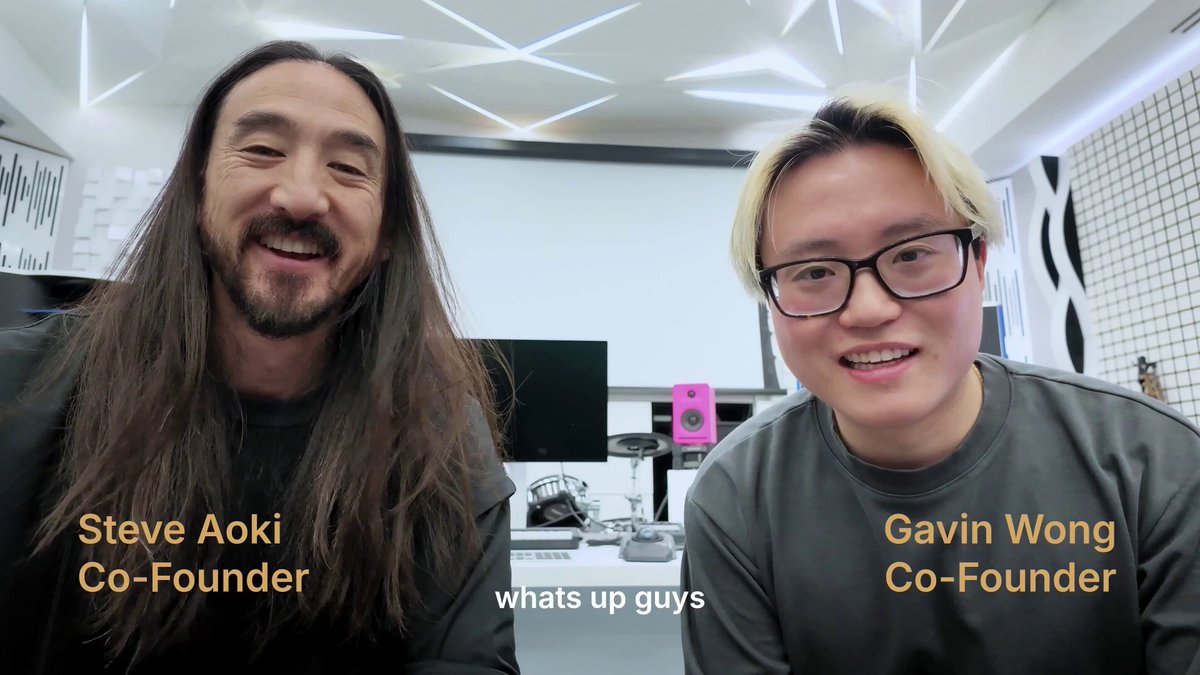
The announcement from @SelendisAI says Archon was built by Steve Aoki and industry experts, aimed at what it calls the next generation of content. If you have ever come back from a generation session with two hundred clips and a deadline, you know why that pitch lands. Generating is the fun bit. Assembling is the slog.
What Selendis actually claims
Archon powers personal AI video editors that learn each creator's taste. Selendis lists three sources of that learning:
- Decisions made in its multiplayer editor.
- Your past video catalogue.
- Reference videos you cite.
The company also says every video edited makes the editor more accurate for that creator or team. That is a claim about a feedback loop, and it is the interesting one. A cutting model that starts generic is a toy. One that converges on your pacing, your shot-length habits and your taste in transitions could be a real assistant.
The offer is early access plus three months free, by commenting "SELENDIS" on the announcement post.
What this could change in a real workflow
AI filmmakers currently edit in one of two ways. Either you cut by hand in a conventional editor, or you lean on auto-edit features that mostly trim silences and drop captions on. Neither understands that a generated shot is a good take because of one specific four-frame gesture.
If Archon works as described, the practical gain is a first assembly you can react to, not a blank timeline. That matters most for volume work: short-form series, music videos, brand cut-downs and episodic content, where the same creator makes the same kind of decision fifty times.
The multiplayer editor angle is also worth noting. It suggests the training signal comes from collaborative cutting, which could suit small teams passing a project between a director, an editor and a colourist.
What was not said
The post gives no release date beyond early access. There is no public pricing after the three free months. There are no benchmarks, no sample timings beyond "minutes", and no side-by-side against a human edit or an existing auto-editor.
There is also no detail on input limits. We do not know how much raw footage it can take, what resolutions or frame rates it handles, or whether it exports an editable timeline to other software. That last one matters. A finished edit you cannot adjust is a dead end. An edit that opens as layers in your existing editor is a tool.
Privacy is another open question. The model learns from your past catalogue. Creators working under NDA, or with client footage, will want to know where that data lives and whether it trains anything beyond their own editor.
Finally, "zero-shot" is a strong phrase. It means no per-project setup, and taste is subjective. Expect it to be best on conventional, rhythm-led content and weaker on anything that depends on subtle narrative judgement.
What to test first
If you get access, do not start with your best project. Run a fair test:
1. Cut a two-minute sequence yourself and time it.
2. Feed Archon the same raw footage and compare the first assembly, not the polished result.
3. Check how many of its choices you keep, and how long fixing the rest takes.
4. Try it with generated footage from a model like Seedance 2.5, where clips are short and inconsistent in length.
5. Test the learning claim. Edit three videos, then see whether the fourth is closer to your style.
The three free months make this a cheap experiment. The real cost is the time you spend teaching it, so decide in advance what result would make that worthwhile.
Archon is a promising idea from a credible-sounding team, with almost no proof yet. Treat it as a tool to try, not a workflow to rebuild around.
Source: Selendis announcing Archon