Seedance 2.5 combined with APOB AI can now produce a 30-second consistent AI influencer vlog, and that gives creators a repeatable character pipeline
Two independent creators have demonstrated a workflow pairing APOB AI for character consistency with Seedance 2.5 for motion and continuity, producing 30-second vlog-style videos with a stable AI persona across every shot.
The single biggest obstacle to a believable AI influencer has never been the quality of any individual frame. It has been continuity. The same face, the same mannerisms, the same spatial relationship to a handheld camera, held across thirty seconds of footage cut from multiple generations. That is a hard problem, and two independent creators have now documented a workflow that gets closer to solving it than anything previously shown in the wild.
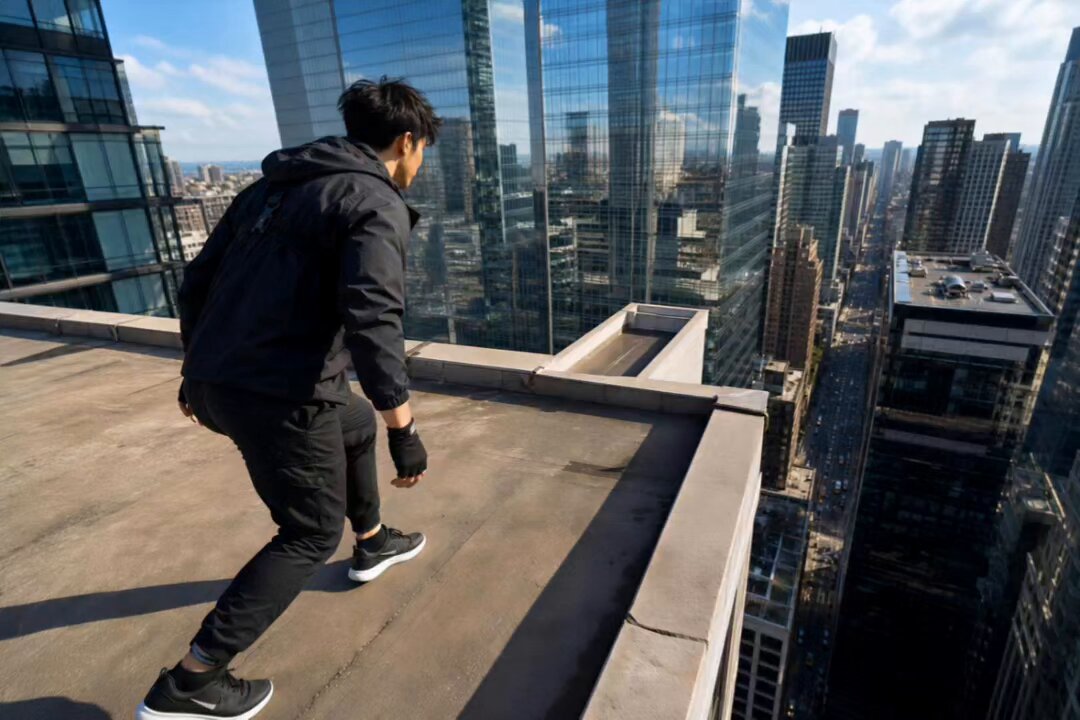
Per creator @Glow_Fragrance and separately confirmed by @aiwithsubah, pairing APOB AI for character identity with Seedance 2.5 for motion and scene continuity produces a 30-second vlog that reads less like a stitched reel and more like footage from a single shooting day. Natural movement, camera behaviour that mimics a real handheld operator, and a face that does not drift between cuts. Both creators arrived at the same conclusion independently, which is the closest thing to a real-world benchmark this side of a controlled test.
What the workflow actually involves
The pipeline, as described, runs in two stages. APOB AI establishes and locks the character, producing a consistent reference identity that persists across generations. Seedance 2.5 then handles the motion layer: body animation, camera simulation, and the scene-to-scene continuity that makes a thirty-second piece feel coherent. Neither tool is doing the other's job. That division of labour matters, because it means the workflow is modular. If a better character-consistency tool appears, you swap it in at stage one without rebuilding the rest.
The thirty-second duration is significant. It matches a standard social short and, crucially, it matches the output window that has been attracting the most attention from Seedance 2.5 users recently. Holding identity and physics across that runtime, across what are almost certainly multiple generation calls stitched together, is a different challenge from holding them across a single clip.
What has not been said
No pricing breakdown for the combined workflow has been shared. APOB AI operates on its own credit or subscription model separate from Seedance 2.5, so the real cost of a thirty-second piece at production volume is unknown. Neither creator has published the exact prompt structure, the number of generation calls required, or the amount of manual selection and retrying involved. Anecdotes are not benchmarks. What looks seamless in a polished demo may require ten discarded takes for every keeper, and no iteration count has been disclosed.
It is also worth noting that both posts were made on the same day by accounts that appear to be in the same creator ecosystem. That is two independent data points, but they are not wholly unconnected. The workflow is real; the claimed ease of execution should be tested before being taken at face value.
Why this matters to working AI filmmakers
The AI influencer use case is frequently dismissed as a novelty, but the underlying technical problem, a stable character identity that survives across multiple generation calls and camera angles, is exactly the same problem that matters in narrative short film, in advertising, and in any project that requires a recurring character. A workflow that credibly solves it for a thirty-second vlog is a workflow that can be adapted for a sixty-second product spot or a two-minute short.
The combination also points toward a modular stack becoming the standard approach for character-led AI video. Single-tool solutions have consistently struggled with the identity drift problem. Pairing a dedicated character-locking tool with a best-in-class motion model is architecturally sounder, and this is an early demonstration of that approach working at a meaningful duration.
If you are testing this yourself, the obvious starting point is APOB AI's character export into Seedance 2.5, paying close attention to how much prompt engineering is required to maintain the character between scene transitions. That seam, the cut from one generation to the next, is where identity drift historically appears first. Document your retry rate honestly. The workflow is worth exploring, but its repeatability at scale is the question that still needs an answer.