Seedance 2.5 or Kling 3.0: which one keeps your character looking like the same person
Identity drift across cuts is the failure that kills most AI shorts. Here is how the two leading models differ in how you have to prompt around it.
Every AI filmmaker hits the same wall in their second week. The single shot looks incredible. Then you cut to another angle of the same character and it is somebody else: different jawline, different hair length, a jacket that has quietly changed colour. Identity drift is the difference between a nice clip and a film, and it is the first thing worth comparing two models on.
We analysed how prompts for both models are actually written across our library, and the two ask for fundamentally different things from you.
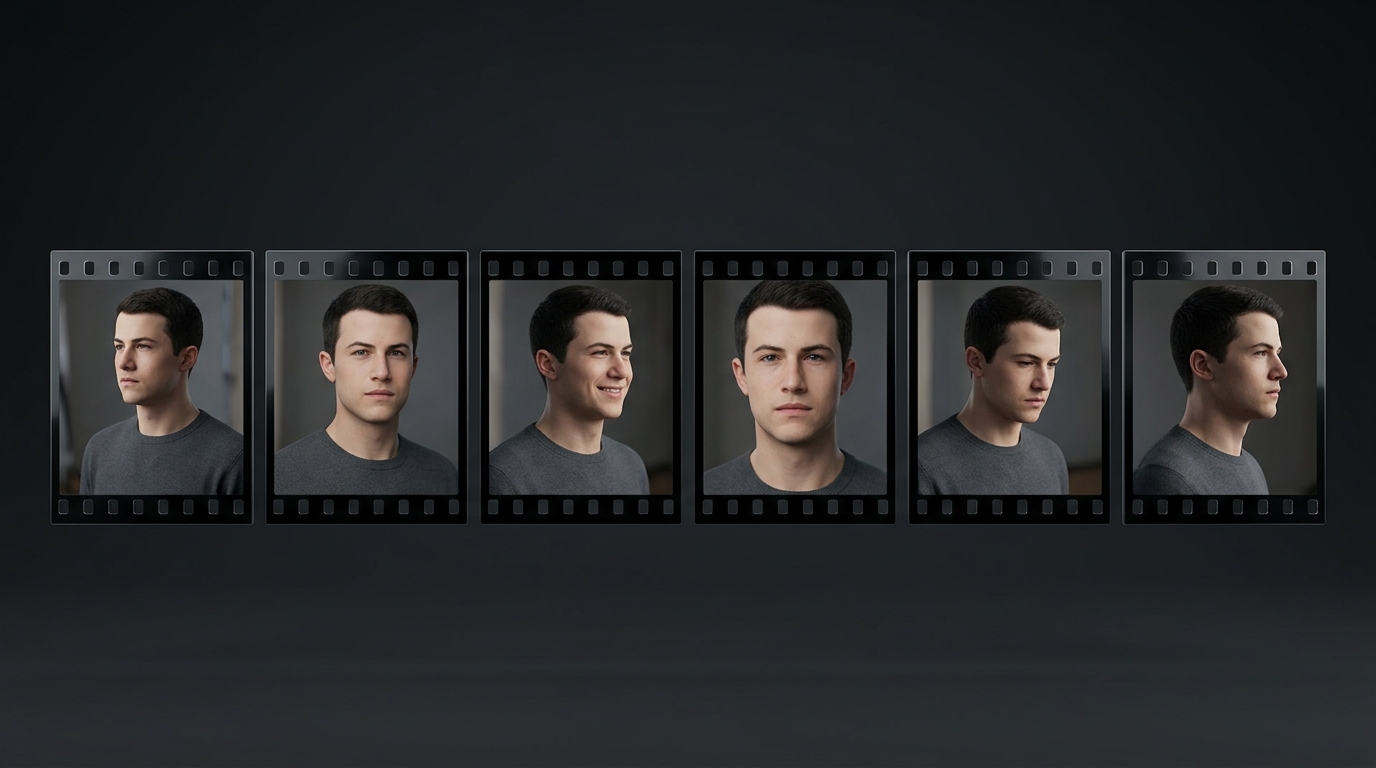
Seedance 2.5: reference-led
Seedance's answer to consistency is quantity of input. The 2.5 release takes up to 50 references per generation, and the prompts that hold up in practice are the ones that spend that budget deliberately: several angles of the principal, a costume reference, and a lighting reference, rather than fifty frames of the same face.
The practical consequence is front-loaded work. You build a reference set before you generate anything, and once it is right, consistency largely takes care of itself across a sequence. The failure mode is subtler than drift: with a heavy reference stack the model can become rigid, holding the face so firmly that performance flattens.
Kling 3.0: description-led
Kling rewards specificity in language more than volume of reference. The prompts that survive are the ones that fix identity in words and repeat those words verbatim at every mention of the character: the same three or four physical descriptors, the same costume phrasing, every single time. Where Seedance users build a reference folder, Kling users build a character bible and paste it in.
That is more work per shot and less setup overall, which suits short pieces and rapid iteration. It degrades faster across long sequences, where small phrasing differences accumulate into visible drift.
What actually decides it
If your project has a recurring character across many shots, Seedance's reference approach is the more reliable foundation and worth the setup. If you are making a lot of short unrelated pieces, Kling's language-led method is faster to work with and you will not miss the reference stack.
The honest caveat: neither of these is a benchmark. This is a reading of what works in prompts that performed well, not a controlled test with the same subject through both models, and the models are moving quickly enough that any such test ages within weeks. Treat it as a description of how each one asks to be handled, not as a scoreboard.
The test to run yourself
Generate your character in six shots: two wides, two mid shots, a close-up and a profile. Do not adjust between generations. Then put the six frames side by side and look only at the face. Whichever model gives you six people you would accept as the same person is the answer for your project, and it takes about twenty minutes to find out.
Analysis based on prompt structures across the Unhindered AI video prompts library.