Seedance 2.5 is now on more than a dozen platforms, and the price you pay depends heavily on where you run it
Creators are posting Seedance 2.5 clips from PixVerse, OpenArt, ImagineArt, Dreamina, Wizstar and more. One price chart puts the cost per second between 23 cents and 5 cents depending on the model you pick.
Seedance 2.5 has stopped being one product and become a feature you find almost everywhere. In the last two days, creators have posted clips made with it on PixVerse, OpenArt, ImagineArt, Dreamina, Wizstar, Renoise, Fish Audio and Venice Studio. That is eight different front doors to one model family, in 48 hours.
For a working AI filmmaker, that is good news with a catch. More competition should push prices down and add useful tooling. The catch is that the same model behaves differently depending on the wrapper, the resolution cap and the credits you burn per attempt. The hard part is no longer getting access. It is choosing where to spend.
What creators are showing
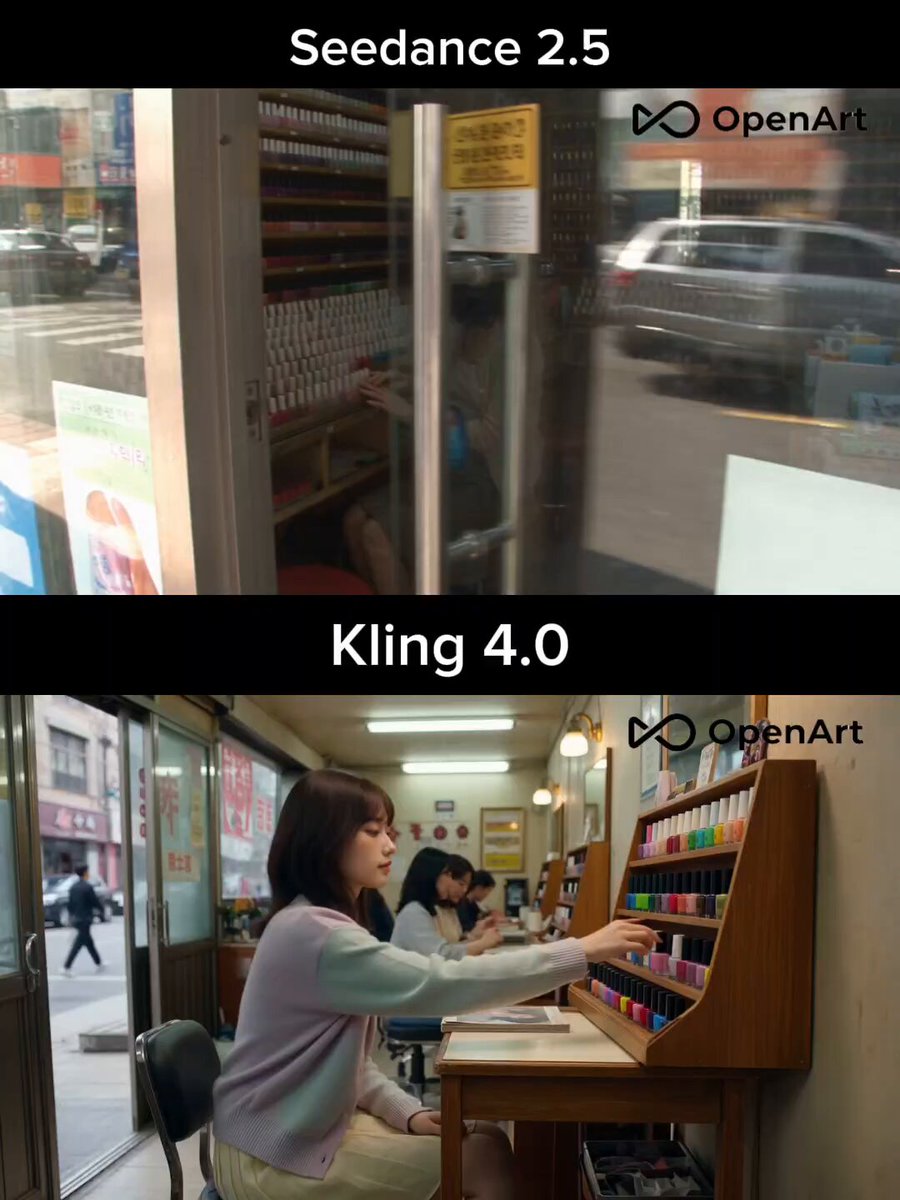
Per creator @QAiStudio, a 30-second, 12-cut skincare vlog was built on @PixVerse using Seedance 2.5, with a camcorder look written entirely into the prompt: handheld shake, tape grain, muted contrast. @doctorwasif ran a similar early-2000s MiniDV prompt on @openart_ai and asked followers to judge it against Kling 4.0. That is a question, not a result, so treat it as a prompt to test yourself.
@Xaroon_x posted a zombie action sequence on @ImagineArt_X with a prompt that uses reference images to lock a protagonist, a horde and a rooftop location. @Just_sharon7 shared a 20-second Edo-period fantasy fight on @renoiseai. @Sharjeelai_786 posted thriller and action-comedy clips on @WizstarAI, and several of these accounts attach referral links, so read the enthusiasm with that in mind.
The pattern across the prompts is useful. They are long, structured and shot-by-shot, often with timecodes such as Shot 1 (0 to 3s). Reference images carry identity. Camera language and a lo-fi capture format do the realism work.
The price picture, with a warning
One post from @Inomsxbt lists per-second prices for 1080p text to video from Monid's list pages: HeyGen Video 1 at $0.05 on promo, Kling 2.6 at $0.07 (silent), Kling 3.0 at $0.168, Seedance 2.5 at $0.23 at 720p, and Seedance 2.0 at $0.37. Note that Seedance 2.5 is listed at 720p there, so it is not a like-for-like comparison with the 1080p rows. This is one person's reading of one aggregator's prices, and I have not verified it.
Separately, @hasantoxr claims an agent product called Voyager makes Seedance 2.5 around five times cheaper than Higgsfield by doing previs in Blender and edits in DaVinci Resolve and Premiere Pro, with the agent routing each step. The claim is half the price per generation with three times fewer calls. No independent test has been shown.
What was not said
None of these posts is from ByteDance. There is no official statement of platform-by-platform resolution limits, maximum clip length or commercial licensing terms in this batch. Some platforms advertise 30-second outputs, others 15 or 20 seconds. Several demos are the creators' best pick from unknown numbers of attempts, so they are anecdotes, not benchmarks.
There is also no confirmed information about whether every platform runs the identical model build, or whether content filters differ. Posts from @CB_Fighters on Venice Studio suggest looser moderation there, but I would check each platform's terms before relying on that.
What to test first
Take one shot you already know well and run the same prompt on two platforms. Compare cost per usable second, not cost per generation. Count how many tries it takes to get a clean take. If your project needs continuity, test the reference-image workflow that @Xaroon_x shows, because identity drift is where cheap wrappers usually fall down.
If you are cost-driven, price a 60-second sequence on three platforms before committing a credit pack. Cheaper per second often means more rerolls.
Sources: @QAiStudio's PixVerse demo, @doctorwasif's OpenArt comparison, @Xaroon_x's ImagineArt prompt, @Inomsxbt's price chart, @hasantoxr's Voyager claim.