Higgsfield says one Claude prompt made a 10-minute dinosaur documentary, and AI filmmakers should test it on a short first
Higgsfield says its MCP inside Claude turned a single prompt into a finished 10-minute documentary, with script, shots, narration, music, effects and edit. Here is what to test before you trust it.
A ten-minute film with no editor, no timeline and no second tool. That is what @higgsfield_ai says it has just done. Its post claims a full dinosaur documentary was "one-shotted" in Claude using the Higgsfield MCP, with "broadcast-ready quality" and "100% automated".
The list in the post is the whole pipeline. Script. Shots. Narration. Music. Sound effects. Edit. All of it from one prompt, and Higgsfield has published that prompt in full. For anyone who has stitched a short together from five subscriptions and a lot of exporting, this is the claim to take seriously. It is also the claim to test hard.
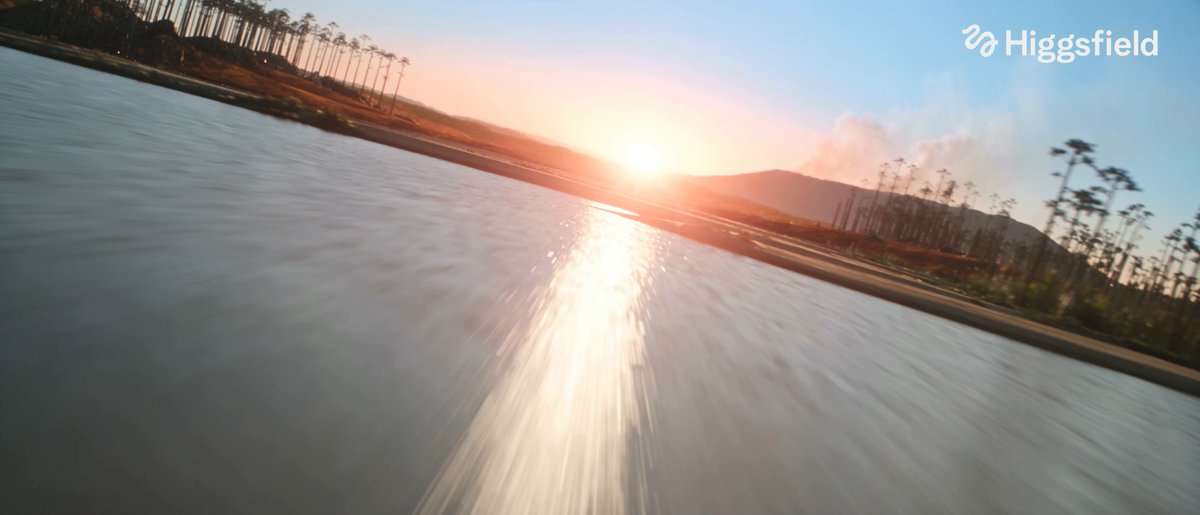
What the prompt actually asks for
The published prompt is a proper brief, not a one-liner. It asks for a 10-minute nature documentary about real dinosaurs, from the first of them on Pangaea to the asteroid. The spec is 4K, 21:9, 24 fps, with English narration.
The structure is 20 scenes of 30 seconds each, running through the Triassic, Jurassic and Cretaceous. The scene list is specific: Coelophysis on Pangaea, drought and eruptions, Plateosaurus, Brachiosaurus, Diplodocus, Stegosaurus against Allosaurus, Archaeopteryx over a lagoon, the first flowers, Spinosaurus hunting a giant fish, Quetzalcoatlus in flight, and the fighting dinosaurs of the Gobi.
That detail matters. The prompt does the directing. It fixes the running time, the pacing and the beats before a single frame is made. The tool is being asked to execute a shot list, not to invent a film.
What this changes in a real workflow
The interesting part is not the dinosaurs. It is that the model driving the job is a general assistant with a video toolset attached, not a video app with a chat box on top. Claude plans the film, then calls Higgsfield for the pictures and sound.
If that holds up, the planning layer becomes the product. You write one structured brief, and the assistant breaks it into scenes, generates them and cuts them together. Revisions then happen in conversation. "Make scene twelve darker" replaces reopening a project.
The current alternative is manual, but it is controllable. You generate clips in one tool, voice in another, music in a third, then assemble in an editor and fix continuity by hand. It is slow. It also lets you reject a bad shot before it ruins the cut.
What was not said
Higgsfield has not said what this cost. There is no credit count, no price and no generation time in the post. A 10-minute 4K film is a lot of footage, so the bill is the first thing a working filmmaker will want to know.
It has not said which video model produced the shots. It has not said how many attempts it took, or whether this is the first run or the best of several. "One-shotted" is a claim about the process, and a single published success is an anecdote, not a benchmark.
"Broadcast-ready" is also Higgsfield's own description. No broadcaster, colourist or sound mixer is quoted. Documentary is a forgiving genre for generated footage, because animals in motion carry less continuity risk than a human face. Do not assume the result transfers to drama.
There is no stated availability or pricing for the MCP beyond the demonstration. Check the Higgsfield site before planning a project around it.
What to test first
Do not start with ten minutes. Take the same prompt and cut it to three scenes of 30 seconds. Check three things.
First, continuity. Does a Brachiosaurus look like the same animal across two shots? Second, the narration against the picture. Does the voiceover describe what is on screen, or drift? Third, the edit. Are the cuts motivated, or just sequential?
Then cost it. Multiply your three-scene bill by nearly seven and decide if the full film is worth it.
If the short passes, the useful habit is the prompt itself. Write briefs like this one, with a running time, a scene count and named beats, even if you never use the MCP. A structured brief is what makes any automated pipeline behave.
Source: the announcement and demo and the full prompt, both from Higgsfield on X.