Kling has shown how a director made a car racing film with Kling 4.0, and it is the genre most AI filmmakers avoid
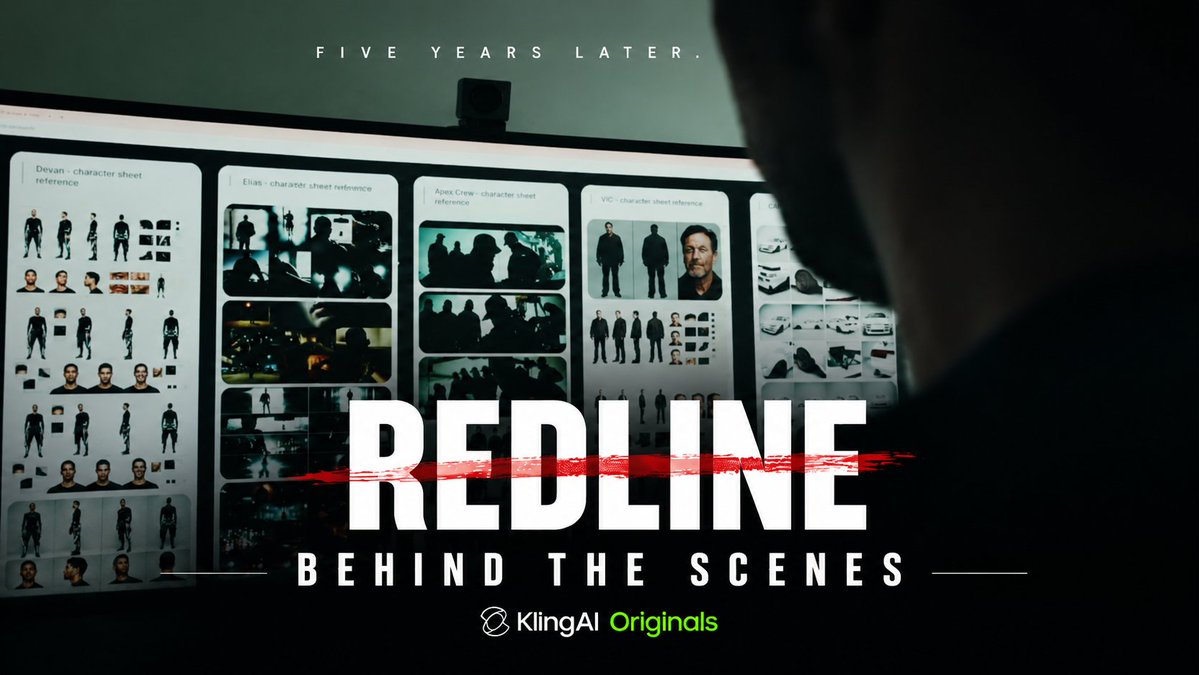
Kling AI has released a behind-the-scenes look at Redline, a motorsport film directed by Stephane Benini using Kling 4.0. Racing is one of the hardest things to hold together in AI video, so it is worth studying.
Car racing is where AI video usually falls apart. Wheels slip, cars change shape between cuts, and speed turns into mush. So when Kling AI puts out a behind-the-scenes film about a motorsport story made with Kling 4.0, it is picking a fight on purpose.
The film is called Redline, a Kling AI Original. Director Stephane Benini (@BeniniStep9801) walks through how he used Kling 4.0 to make it. Kling's own framing is that this puts AI filmmaking to the test in one of its most challenging genres. That is a bold pitch, and a useful one for anyone who has tried to keep a hero car consistent across a chase.
What Kling has actually said
The announcement is short. @Kling_ai describes adrenaline-pumping racing sequences and captivating performances, names the director, and points to a behind-the-scenes video. A follow-up reply links the full film.
That is the whole claim. There is no shot count, no clip length, no number of rerolls, and no breakdown of what was done in Kling and what was done elsewhere. The word Original also tells you this is a Kling-commissioned piece, so treat it as a showcase from the company, not an independent test.
Why it matters for your workflow
Most AI film work avoids hard motion. People cut around it with close-ups, interiors and slow moves. A racing film cannot do that. It needs fast camera travel, repeated vehicles, and performers who read as the same people from one scene to the next.
If Benini shows his working, the useful parts are the boring ones. How he planned coverage. How he kept the car and driver looking the same. How he handled speed and impact. Those habits transfer to any genre with fast action, from chases to sport to fight scenes.
There is also a practical comparison to make. If you are on Seedance 2.5 or another current model for action, watch Redline with your own failed shots beside it. Note where Kling 4.0 holds the car's shape and where it does not.
What to test first
1. Watch the behind-the-scenes video before the film, and write down every technique he names.
2. Build a three-shot sequence of one car: a rear tracking shot, a side pass and a cockpit cut. Check whether the car's colour, livery and proportions survive all three.
3. Test performance shots separately from action shots. Racing drama lives in the faces in the cockpit and the pit, not just the cars.
4. Keep a rerolls log. It is the number Kling has not given you, and the one that decides whether this is affordable.
What is still unknown
Kling has not said when Kling 4.0 is generally available to everyone, what it costs per second, or what clip lengths and resolutions it supports. It has not said how much of Redline was cleaned up or assembled outside the model. A separate teaser says Kling Image 4.0 is coming soon, with no date.
Until those details land, Redline is evidence of what a skilled director can get out of the model with Kling's support, not proof of what an average user will get on a normal budget.
The takeaway
This is worth an hour of your time. Not because the film settles anything, but because a director has taken on the hardest kind of motion and shown his process. Steal the planning, ignore the polish, and run your own racing test before you believe any of it.
Sources: Kling AI announcement of the Redline behind-the-scenes, Kling AI reply linking the full video.