Kling can now run a whole ad campaign from one instruction, storyboard included
Kling has published a workflow where style analysis, storyboarding and final generation run as one automated chain. The batch era of AI video has quietly started.
Kling has published something more consequential than another model update. Using MCP, the protocol that lets AI tools call each other, the company demonstrated a food promo workflow that runs end to end: analyse a creative style, build the storyboard, generate the finished videos. One instruction, a batch of commercials out the other side.
Most model news is about a single generation getting better. This is about the generation stopping being the job.
Why food promos are the obvious first target
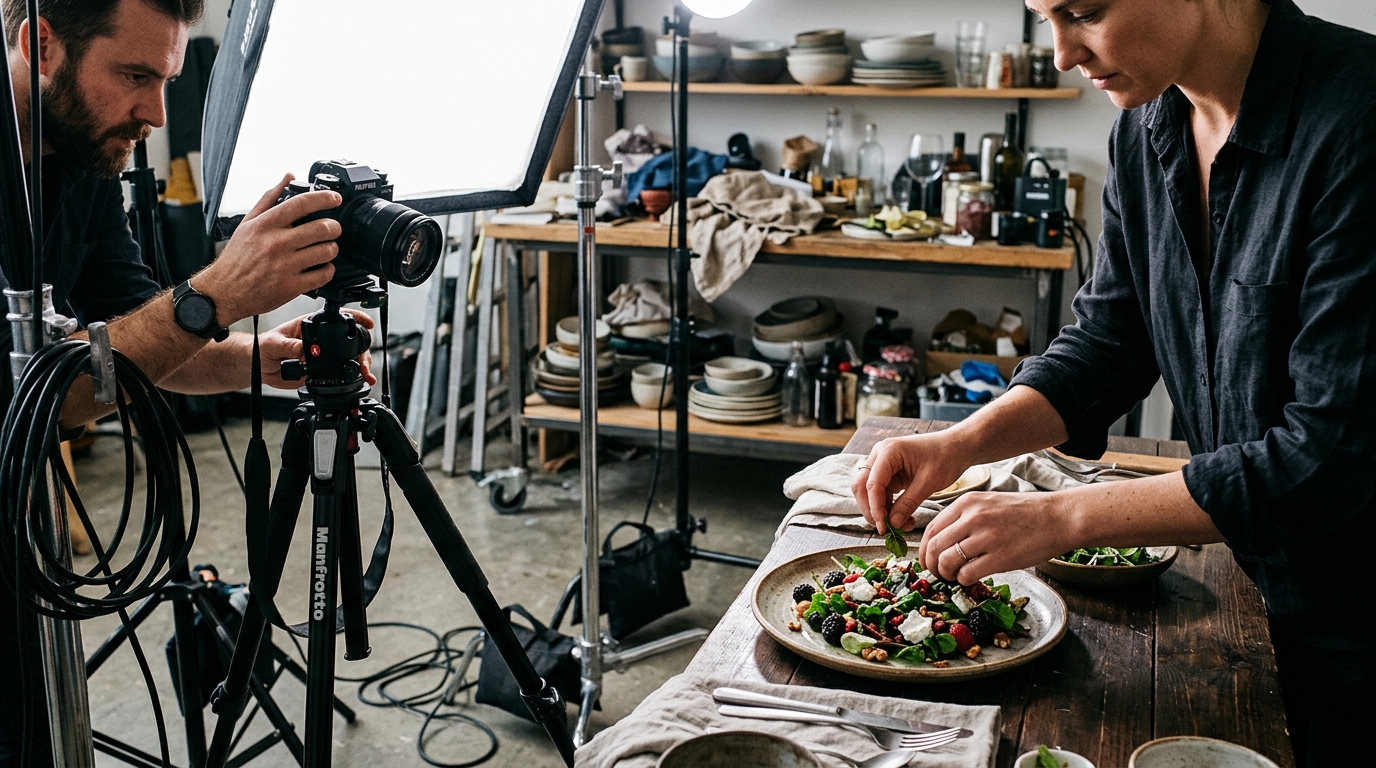
It is a well-chosen demo. Food advertising is high volume, tightly formatted, and structurally repetitive: hero shot of the product, an ingredient or preparation beat, a texture close-up, a final beauty frame. Every restaurant chain needs dozens of these a month across a menu that changes seasonally.
That combination of repetition and volume is exactly where per-shot prompting stops making sense. If you are producing four videos, writing four prompts is fine. If you are producing four hundred, the prompt stops being the craft and the pipeline becomes the craft.
What MCP actually changes
Until now the automation story in AI video has mostly been fake: people describe a workflow, then do the steps by hand in three browser tabs. MCP is what lets those steps become one call. A model can hand a storyboard to a generator, the generator can hand outputs back for review, and the whole chain can be triggered programmatically.
For a studio, the practical consequence is a shift in where your value sits. If anyone can batch-generate competent food promos, the differentiator moves upstream to the creative style being analysed in the first place, and downstream to whether the results are edited by someone with judgement.
The honest caveats
This is a tutorial, not a case study. There is no published data on how many of the batch outputs are usable without intervention, which is the number that decides whether this is a production workflow or a demo. Batch generation has always been easy; batch generation with a low reject rate is the hard problem.
It is also worth noting what does not automate. Nothing in this chain decides whether the campaign is any good, whether the food looks appetising to a human rather than to a model, or whether the brand would sign it off. Those remain the job.
What to do about it
If you sell volume work, learn the pipeline tooling before your clients discover it, because the pricing conversation is coming either way. If you sell single hero pieces, this changes less than it appears to, but it does compress the low end of the market underneath you.
The test worth running: take a format you have made twenty times, build it as a chain rather than as twenty prompts, and count how many outputs you would actually ship. That number is your answer.
Source: Kling's MCP workflow tutorial, 3 August 2026.