How your aspect ratio is already telling your story (before anything moves)
Aspect ratio is not a delivery checkbox. It is a compositional decision that shapes how every frame feels before a single prompt is written. Here is how to use it deliberately.
There is a decision most AI filmmakers make in about four seconds, usually inside a dropdown menu, before they have thought about the scene at all. You pick 16:9 because it looks like a film, or 9:16 because it goes on Instagram, and then you spend the rest of your session writing prompts wondering why the footage feels a bit inert. The ratio is already working on your audience. The problem is that it is working against you, not with you.
Aspect ratio is not a technical setting. It is the first compositional argument your film makes. It tells the viewer how much world exists to the left and right of your subject, how much sky or floor bears down from above, whether figures feel trapped or free, whether a landscape feels epic or claustrophobic. Cinematographers think about this before they book a lens. AI filmmakers tend to think about it, if at all, when they are ready to export. Shifting that decision to the top of your process, before any prompt is written, changes what you ask for and what you get.
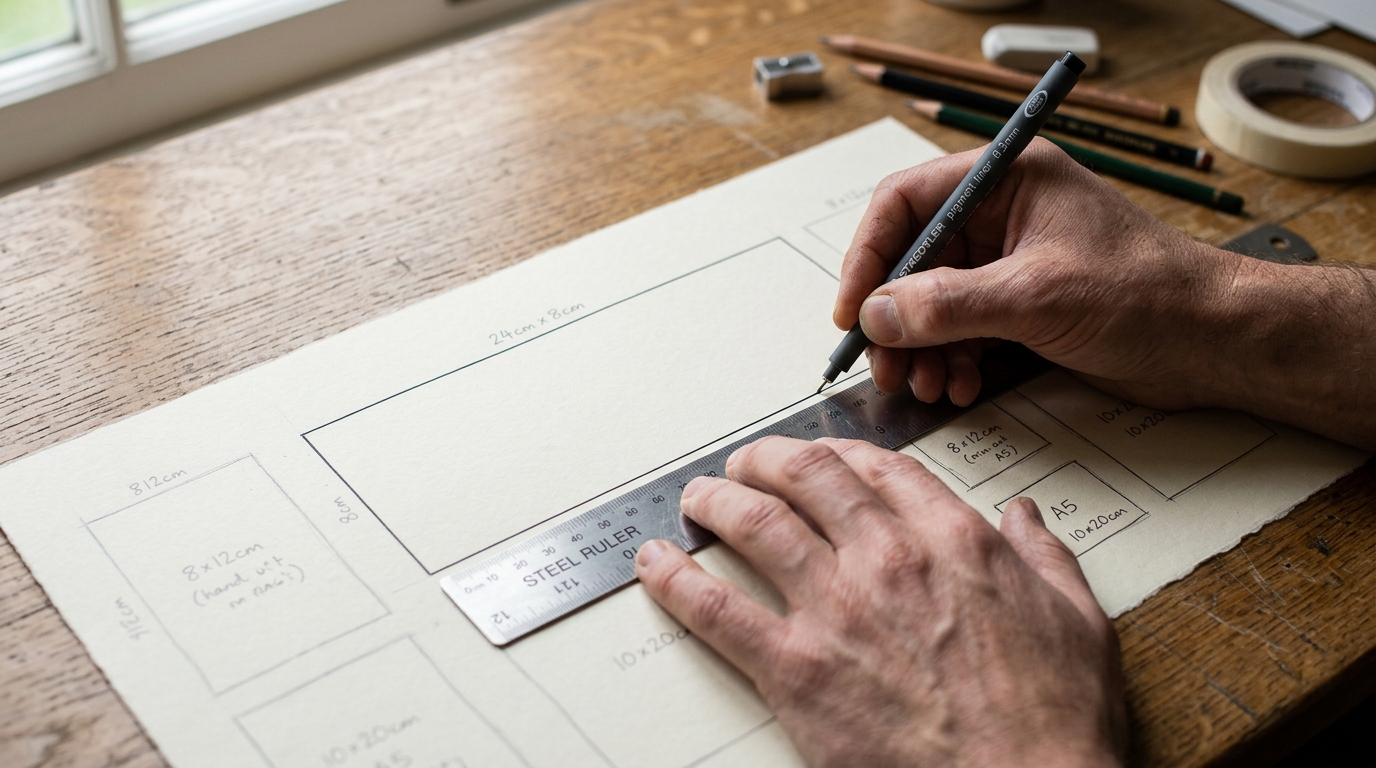
What each ratio actually does to the viewer
Width creates relationship. The wider your frame, the more the image asks the viewer to read left-to-right, to place the subject inside a world, to sense distance between things. 2.39:1 (anamorphic scope) is so wide that a single figure in frame reads as lonely by default. The horizontal space earns its keep by doing emotional work you would otherwise have to write into the prompt.
Height creates pressure. 9:16 (vertical, portrait) compresses the world into a column. It foregrounds faces and bodies, removes peripheral context, and puts the viewer in close psychological proximity to the subject. That is why it works for confession-style monologue and why it fails for landscape or action sequences that need lateral motion to read at all.
4:3 and 1:1 feel contained, retro, deliberate. Square or near-square frames put equal weight on horizontal and vertical information, which gives still, face-centred images a kind of painted flatness that works well for memory sequences, archival aesthetics, or low-energy contemplative scenes. When something moves violently in a square frame it feels wrong in a useful way.
16:9 is neutral. It is the ratio no one questions, which is precisely why it so often delivers footage that is competent but tonally undefined.
How to make the decision before you write a single prompt
Start with a single sentence about what the scene is doing emotionally. Not what happens in it, what it does to the viewer. Then map that sentence to a ratio:
```
Scene feeling: isolation, the character is the only thing in the world
Ratio candidate: 2.39:1 (the empty width earns the loneliness)
Scene feeling: trapped, no exit, internal pressure
Ratio candidate: 4:3 or 1:1 (compression, no room to breathe)
Scene feeling: intimacy, direct address, confession
Ratio candidate: 9:16 (proximity, the face fills the column)
Scene feeling: classical narrative, movement through space
Ratio candidate: 16:9 (neutral, allows the action to read clearly)
```
This takes ninety seconds. It gives your prompts a constraint to work inside. When you know you are shooting 2.39:1, you write for subjects placed off-centre, for negative space that means something, for horizon lines that cut low. When you know you are shooting 9:16, you write for close subjects, for vertical movement, for faces.
Compositional rules that survive the translation into prompts
Whatever ratio you choose, three habits improve every frame you generate.
Lock your horizon early. A drifting horizon, common in generated footage of any outdoor scene, reads as motion sickness at 2.39:1 and as amateurism at 16:9. Include horizon position as a compositional instruction, not just as a location detail.
```
"low horizon line, sky occupying upper two-thirds of frame, subject standing in lower third, flat open ground"
```
Name your negative space. Empty areas of the frame are compositional objects. If you do not name them, the generation will fill them with something. Specify what the space contains or specify that it is empty.
```
"subject in right third of frame, left two-thirds open water, nothing else in frame"
```
Match your depth of field choice to your ratio. Wide, shallow focus in a very wide frame creates a strange push-pull: the viewer wants to read across the frame but the focus plane keeps pulling them to a single point. Deep focus tends to suit wider ratios. Shallow focus suits tighter ratios. It is not a rule you must never break, but it is a default that tends to produce coherent images.
The before and after
Before this habit: you generate footage in 16:9 because it is the default, you write prompts that describe content, and the results feel technically correct but tonally anonymous. The ratio is not helping you.
After: you open a session by writing one sentence about what the scene does emotionally, you pick a ratio that reinforces that feeling, and your prompts inherit a constraint that makes them more specific. The footage arrives already leaning in the right emotional direction.
The ratio decision costs nothing and changes what every subsequent decision is aiming at. Start there next session, before the first prompt window is open.