Higgsfield built a full playable game with Claude and its MCP, and the source is free to download
Higgsfield says Claude, wired to its MCP, produced VOWLORN, a browser action game with generated characters, bosses and sound. The 112 MB package is free, and the pipeline is useful to any AI filmmaker building worlds.
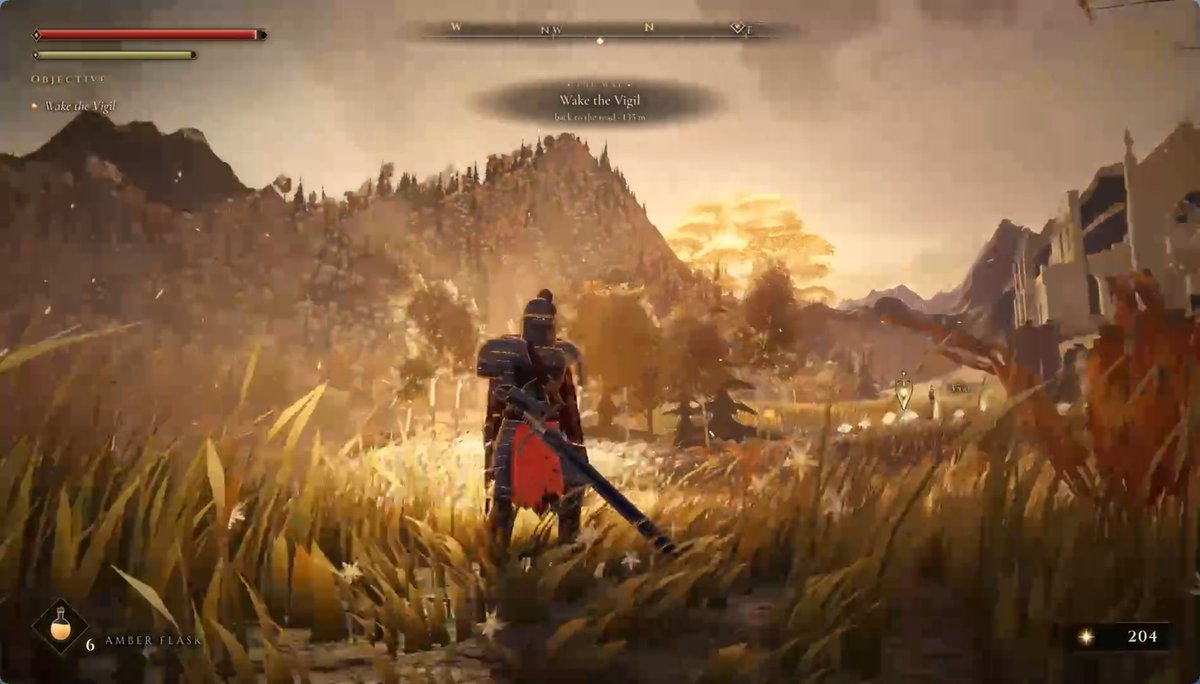
Higgsfield has shown what happens when you point Claude at its MCP and ask for a game instead of a clip. The result is VOWLORN, a playable action game that runs in a browser on desktop, phone or tablet. The game and its source code are free. The package is 112 MB and runs locally in Chrome.
The interesting part is not the game. It is the order of work. @higgsfield_ai lays it out as a thread, and it reads like a production bible. Draw the world first. Design the cast second. Build one playable region before you build a map. Anyone who has tried to hold a consistent look across a series of AI shots will recognise the logic.
How the pipeline runs
It starts with one illustration. GPT Image 2.6 puts the knight, enemies and shop into a single picture, and the team approves palette and ink work there. That picture then gets attached first to every character and prop concept. @higgsfield_ai says the picture never appears in the game. It exists only to lock the look.
Character concepts come from Soul 2.0 and Nano Banana 2.1 through the MCP. Meshy 7 and Tripo H3.1 turn the approved designs into 3D models. Characters get rigs, props stay static, and each animation is a separate job on the character's existing skeleton. The Tin Knight uses 32 clips. Fable retargets the free Quaternius animation library onto the generated rigs, and inverse kinematics keeps the hands on the staff through a swing.
The prompting advice is practical. Give the model something more specific than "scary": a jaw hanging to the chest, hollow eyes with tiny pupils. Generate each asset separately on a plain background, repeat the same style instructions, and ask for characters in a full-body A-pose with empty hands so the rigging step works.
The build itself is split up. Three.js handles rendering, and Fable divided the work across 16 agents, each owning a system. Seven critics then review combat, visuals, controls and performance, and automated players fight the boss on every difficulty. Audio is also code. Web Audio synthesises wingbeats, fire and thunder, and Mirelo and ElevenLabs supply the Giant's shriek and the shopkeeper's recordings.
What is not said
There is no cost figure for the run. No credit count, no hours, no total of how many generations were thrown away. The thread says all of this was done through Higgsfield MCP with Claude, but it does not say how much human steering sat between the prompts and the result. "Fable split the work across 16 agents" is a claim about process, not a benchmark of quality.
The playable clip is silent, so you cannot judge the synthesised score without downloading it. The posts also show several different projects in one thread, including a dragon rider game and a cathedral build, so be careful about which claims belong to which build. The Higgsfield posts do not name a release date for any wider tooling, because there is nothing to release beyond the free package.
What to test first
Take the method, not the game. The strongest idea for a filmmaker is the reference picture that never ships. Make one illustration that fixes palette and line, then attach it to every character and prop before you generate anything else. That is a cheap test, and it works for video as much as for games.
Second, try the plain-background, A-pose character sheet. It gives you clean references for image-to-video, whether or not you ever rig anything. Third, steal the critic loop. Have a model review each build against a short list of notes, as the thread does with simple lines like "let me hover".
Finally, download the 112 MB package and read how the prompts are structured. It is free, and it is a rare look at a full multi-tool chain written down end to end.
Sources: the thread opener on starting with something playable, the free download announcement, the cast and 3D model step, the world illustration step, the deployment step.