Higgsfield has published a production diary for its AI taxi-chase short, and the lessons inside will change how you plan your next project
A watercolour that looked flat, a girl who lost her headphones, a door handle that broke too fast, and a taxi that had to be animated in Blender before it could go anywhere near a prompt. Higgsfield's eight-part thread from the making of its latest short is the most practically useful AI filmmaking breakdown in months.
There is a scene in the Higgsfield short that nearly did not exist. A girl grabs a door handle, the handle breaks, and the joke depends on a tiny pause before she reacts. Prompt after prompt, the beat landed wrong. Blender previews could not fix it either. In the end, the shot was cut from the sequence. That one discarded moment, buried in post seven of an eight-part production thread, tells you more about the current ceiling of AI video than any benchmark.
@higgsfield_ai has spent the past few days publishing what amounts to a full post-mortem on the making of a short film involving car stunts, watercolour backgrounds, a character with headphones, and a taxi that tilts onto two wheels and squeezes between trucks. The thread is terse and methodical, each entry a single problem, a single fix, and a single rule worth keeping. For working AI filmmakers it is the kind of reading that earns its keep.
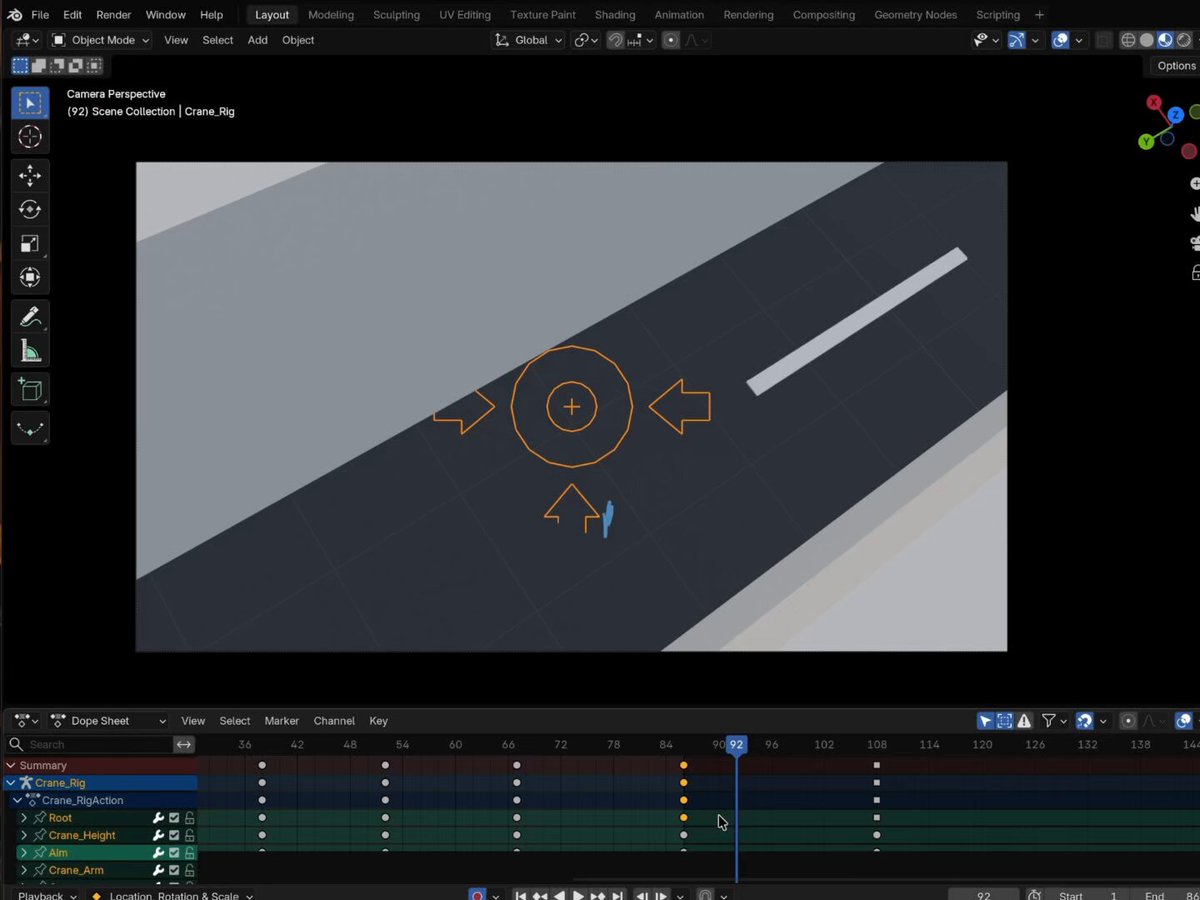
The Blender gate
The most structurally important admission in the thread is that not every shot went through the same pipeline. Simple shots went straight to generation. Complex shots, specifically anything with precise spatial choreography, went to Blender first. The taxi sequence is the clearest example: tilt, squeeze, land. That action was animated in Blender as a grey-shaded preview, which guided camera movement and timing. Image references then supplied the final look. Generation came last.
This matters because it flips the common assumption that Blender and AI video generation are alternatives. Here they are sequential. Blender handles what prompts cannot reliably describe in space, and AI handles what Blender cannot render cheaply in style. The lesson is not to use one or the other but to know which problem each tool is actually solving.
Lighting before art direction
The watercolour background problem is the most transferable tip in the thread. The shots looked flat. The team's instinct was to rethink the art direction. Instead, they changed the lighting. Warm afternoon light and long shadows gave the flat watercolour frames depth they had been missing. The art direction stayed.
The principle generalises far beyond watercolour. Before you swap a style, change a model, or rebuild a prompt from scratch, try adjusting the light. It costs one generation, not a restructured workflow.
Reference images are active ingredients
Two entries in the thread deal with reference images going wrong in ways that reveal how the generation pipeline actually processes them. When the team fixed a camera angle by adding a screenshot as a framing reference, that screenshot was missing the character's headphones. The model kept the angle and dropped the headphones. The fix was to paint the headphones back into the screenshot before using it as a reference. The next generation kept both.
The lesson the team draws is precise: check every reference, including the ones you add purely for framing. A reference image is not a hint. It is weighted input. Whatever is in it, and whatever is missing from it, shapes the output. If your character sheet shows headphones but your framing screenshot does not, the model has two contradictory signals and no way to know which one you care about.
Prompt structure as a shared team asset
The fifth entry describes a prompt template the team built with Claude and then saved as a reusable skill. The structure: scene and style, then what each reference is for, then timed action, then constraints. The team shared it so that every person generating a shot was working from the same scaffold. Different shot, same architecture.
This is a workflow pattern that does not get discussed often enough. Most prompt-sharing focuses on the text of a single good prompt. What the Higgsfield approach describes is a prompt grammar, a repeatable structure that makes output predictable across collaborators and across sessions. If you are working with anyone else on an AI project, or if you want your own work to be consistent across a week of generation, a shared template structure is worth building before you start.
What the thread does not say
There are gaps worth naming. No generation counts, no credit costs, no render times. The thread does not say how many attempts the handle-break shot took before it was abandoned, which would tell you something useful about where the current floor of controllable micro-acting sits. It does not describe the Blender-to-generation handoff in technical detail, meaning that replicating the taxi sequence requires some inference.
The eighth entry has not been examined here because the thread as published through the scouted posts covers entries three through seven. The full sequence presumably opens with context about the project and closes with either a final reflection or a link to the finished film. Both are worth finding.
What to do with this
If you take one thing from the production diary, make it the reference-image audit. Before any generation run, go through every image in your reference stack and ask whether it accurately reflects every detail you need in the output. Add back anything that is missing. That single habit will prevent a category of failures that currently burns a disproportionate share of generation credits.
If you take two things, add the Blender gate. Identify the shots in your project where the action depends on specific spatial relationships that a prompt would have to describe in three dimensions. Those shots are Blender candidates. Everything else can go straight to generation. The division saves time and makes the complex shots actually work.
The acting beats are last and hardest. For now, the honest answer is that subtle reaction timing in a close-up is not reliably solvable by prompting or by Blender preview. The Higgsfield team cut the shot. That is a reasonable call. Test those moments earliest in your production, before you have built continuity around them, so that cutting them costs as little as possible.