GPT-6.2 Astra is now on Higgsfield, and it builds full 3D scenes from code that AI filmmakers can use for camera moves
OpenAI has launched GPT-6.2 Astra and Sol, and Higgsfield is showing Astra building Blender and Unreal scenes from code. Here is what that means for AI video work, and what is still unproven.
OpenAI has launched GPT-6.2 Astra and GPT-6.2 Sol, and Higgsfield wasted no time putting Astra in front of filmmakers. The demos are not video clips in the usual sense. They are 3D worlds, written as code, then rendered.
That is the interesting part. In one @higgsfield_ai post, Astra built a 573-part cinema camera rig purely in Python for Blender Cycles. In another, an entire video is described as a 23,000-line Python program, with every reflection, moving car and sound effect generated from code alone. A third has Astra going from empty Blender scenes to a full Unreal Engine battle royale. If you have ever fought a video model to hold one set steady across ten shots, a scene you can simply point a camera at should get your attention.
What was actually announced
@OpenAI says GPT-6.2 Astra and Sol are available in ChatGPT Work and Codex for Plus, Pro, Enterprise and Edu users. Developers get gpt-6.2-astra and gpt-6.2-sol in the API. Pro 500 subscribers can use an Ultrafast mode with either model, and for the first time Pro 200 subscribers get Ultrafast too, starting with Sol.
OpenAI pitches Sol as an efficient, versatile model for everyday work and multistep agentic tasks. Astra is the one aimed at engineering and visual reasoning, with better layouts and more considered imagery for websites. OpenAI also calls Astra its most capable model ever for cyber, and says the launch comes with tighter safeguards for higher-risk security requests. That is a security story, not a filmmaking one, but it explains why some requests may be refused.
Why this matters for a film workflow
Higher-end video models generate pixels frame by frame. A code-built scene is a different animal. The geometry exists, the lighting is computed, and the camera can move anywhere without the world quietly changing behind it. Higgsfield makes that point itself, saying Astra simulates a whole storm as a single 3D space across every camera cut, and that its 3D islands hold up in macro close-ups with no broken lighting when the camera moves.
There is also a second, quieter use. Higgsfield's posts show Astra turning old source material into explorable 3D, including a 1969 Apollo launch clip and pages from historical science books. For documentary or essay-style AI film, that is a new way to get coverage from material that only exists as a flat image.
What has not been shown
Be careful here. These are showcase clips from a platform that is also running a Black Friday sale, with up to 65% off premium plans in nearly every post. Treat them as marketing, not benchmarks.
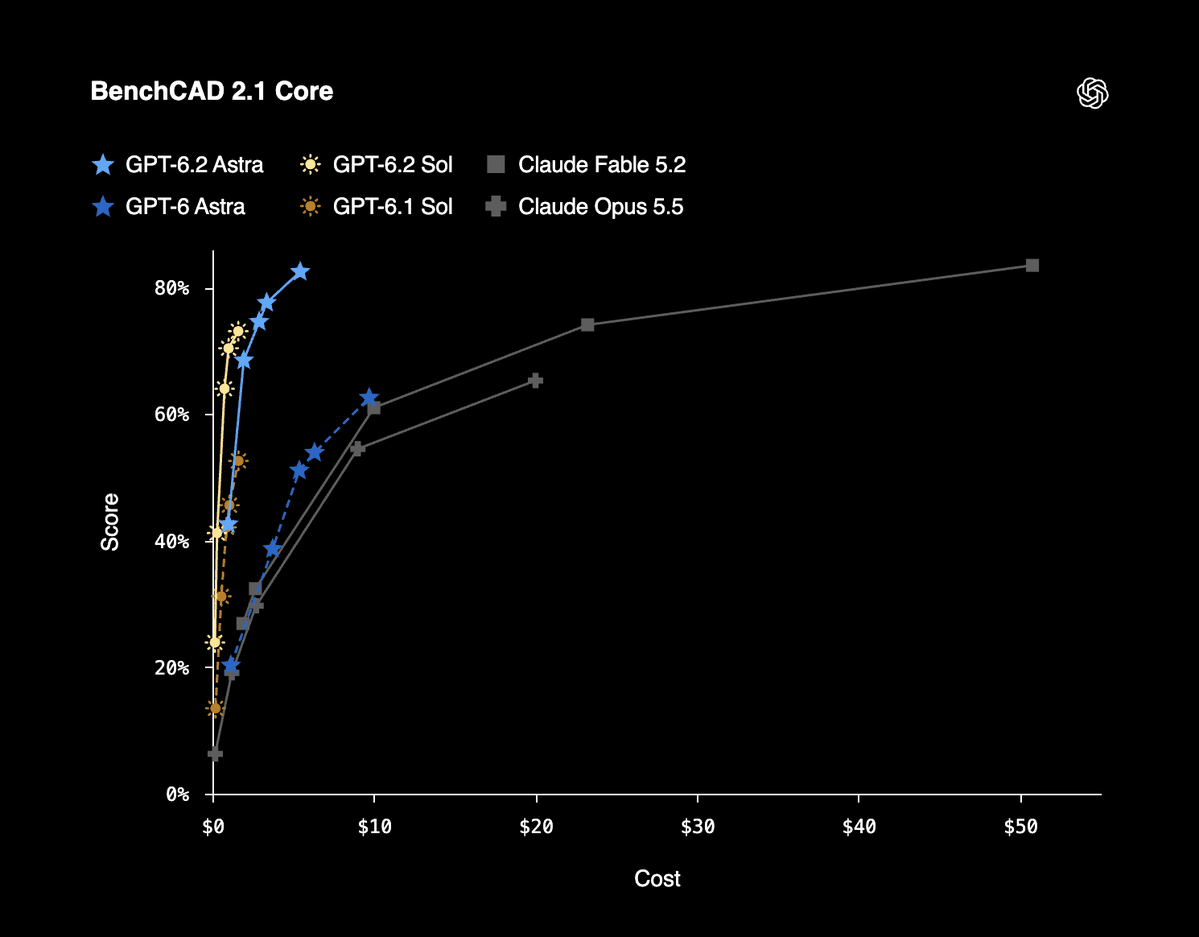
No render times are given. Nobody has said how many attempts each demo took, or how much hand-fixing sat behind the 23,000-line program. Higgsfield also ran GPT-6.2 Astra against a model called Fable 5.2 on a manga boss fight, a T-Rex chase and a samurai chase, but the posts offer no scoring, only clips to compare by eye. Pricing for using Astra inside Higgsfield was not stated, and neither was whether it counts against your existing credits.
What to test first
Start with a task you already know the answer to. Ask Astra for a simple interior set in Blender, one room, one practical light, and a slow dolly. Check three things: does the set stay identical when you cut to a second angle, how many rounds of correction does it take, and what does the render cost in time.
Then compare it with your current method for the same shot, whether that is a locked reference image fed to a video model or a plain kitbash. If the code route wins on consistency, it will earn a place for establishing shots and any scene where the camera has to move through a space. If it needs a developer to babysit it, it will stay a curiosity.
The promise is real. The proof is still in your own render queue.
Sources: OpenAI launch announcement, OpenAI on GPT-6.2 Sol, OpenAI on GPT-6.2 Astra, OpenAI cyber safeguards post, Higgsfield 573-part camera rig demo, Higgsfield 23,000-line Python video demo, Higgsfield Blender to Unreal battle royale demo, Higgsfield Astra vs Fable 5.2 manga fight.