Claude Fable 5.2 can now build a 25-second film in Blender from one brief, and Higgsfield is giving away 72 hours to test it
Higgsfield says Claude Fable 5.2, wired in through its MCP, produced a Blender launch film 4 hours 31 minutes after the brief. Here is what that means for AI filmmakers, and what to test first.
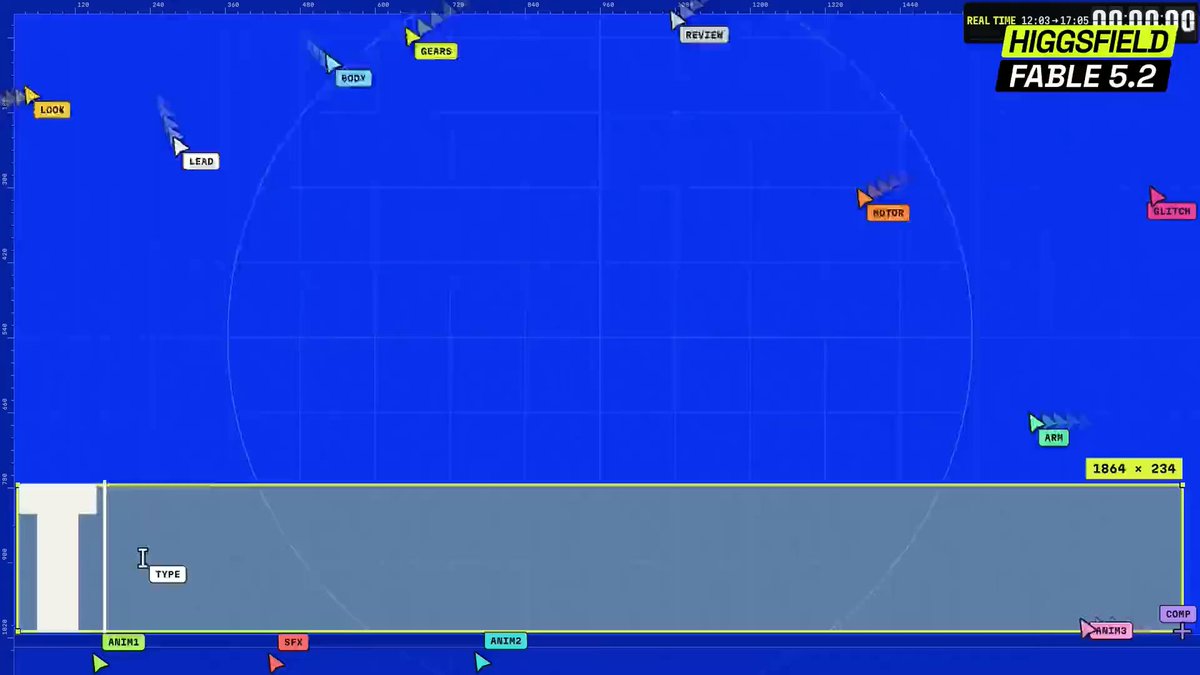
Anthropic has released Claude Fable 5.2 and Claude Mythos 5.2, and within hours @higgsfield_ai was showing what the first of them does when it is plugged into a film pipeline. The headline demo is a 25-second launch film for a product Claude invented. Fable 5.2 and up to 10 helper agents built a robot joint in Blender, entirely in code. Higgsfield says the first final was delivered 4 hours 31 minutes after the brief.
That is the number to sit with. A brief goes in, a rendered, scored film comes out, and a person approves previews along the way. Higgsfield says Claude wrote the brief, generated the music on Higgsfield and brought previews back for approval at three stages. The making-of thread says the film was 960 frames in Cycles at 300 samples. That is about two minutes a frame on a Mac and under 30 seconds on a cloud GPU, with the full film taking about four hours on two machines on Higgsfield GPU.
What the demos actually show
The city demo is the most useful for anyone who thinks in shots. Higgsfield says ten agents split the job: a tower agent for 4,560 glass panes, a traffic agent for 858 vehicles and 2,259 people, a rooftop agent for 88 kinds of props and a camera agent for seven angles. Before any of that, a lead agent planned the shot and put every number in one layout file, then set a rule for the team: detail smaller than two pixels on screen is wasted.
That is a sensible production habit, not a magic trick. One sun at 33 degrees above the horizon backlights every building. One haze volume, 300 metres tall, gives the depth. It reads like a lighting plan written by someone who has done this before.
The other demos stretch the idea. A 20-second unbroken take through a city of 15,600 buildings, with the rain, strike and thunder generated in Higgsfield and 1,200 frames rendered in about six minutes. A Canvas2D scene drawn in three painterly styles with no image models or 3D. Several browser games, including a dragon-flight game of about 50,000 lines of code and a boss fight of about 3,400 lines on Three.js.
How it sits against what you do now
Most AI video work today is prompt, generate, pick, repeat, using models such as Seedance 2.5 or Kling. This is a different lane. The output is code and a Blender scene, so every number is editable. Change the sun angle, change the camera path, rerender. A diffusion clip cannot give you that kind of control over a single parameter.
The trade-off is look. Code-built scenes have a procedural feel, and the demos lean into it with architecture, products and stylised worlds. Nothing posted shows a human face holding a performance, which is where generative video still earns its keep.
What was not said
These are Higgsfield's own showcase projects, not independent tests. We have no failure rate, no count of retries and no figure for how much human steering sat behind the 4 hours 31 minutes. Anecdotes are not benchmarks. The posts do not give a price for the Claude usage itself, and no date is given for when the same workflow will be packaged as a one-click template. The prompts and a launch-film-operator skill are said to be in Higgsfield's blog, which we have not been able to check.
The trial terms
Higgsfield is offering a free 72-hour MCP trial with unlimited access to its top models. Listed limits include Seedance 2.5 at 480p and 30 seconds, Seedance 2.0 at 720p and 15 seconds, and Nano Banana models up to 2K. It costs $0 now, but it auto-renews to Higgsfield Ultra with 40% off the first month unless you cancel. Set a reminder before you start.
What to test first
Do not start with a feature film. Pick one 10-second product or architecture shot, and ask for the layout file first. Check whether the lead agent's numbers match your intent before anything renders. Then change one value and rerender to see how clean the revision loop is. Note the 480p cap on Seedance 2.5 in the trial, and judge delivery quality on a paid tier before you plan a client job around it.
Source: Higgsfield's launch film post, the 10-agent city thread, the render time breakdown, the trial terms, and Anthropic's Fable 5.2 release.