Alibaba's Wan Animate 2 drops skeleton-free character animation, and it works on humans, cartoons, robots and animals in the same scene
Wan Animate 2 from Alibaba replaces explicit pose skeletons with a dual-branch diffusion architecture that reads motion directly from a reference video, and its Lite variant streams arbitrarily long sequences in real time.
Character animation has been AI video's most stubborn problem. Every system that relied on explicit pose skeletons suffered the same failure modes: jitter on non-human rigs, identity drift across frames, and a ceiling defined by whatever keypoints the skeleton could represent. Alibaba's Wan team has now published Wan Animate 2, and its core claim is that it throws the skeleton away entirely.
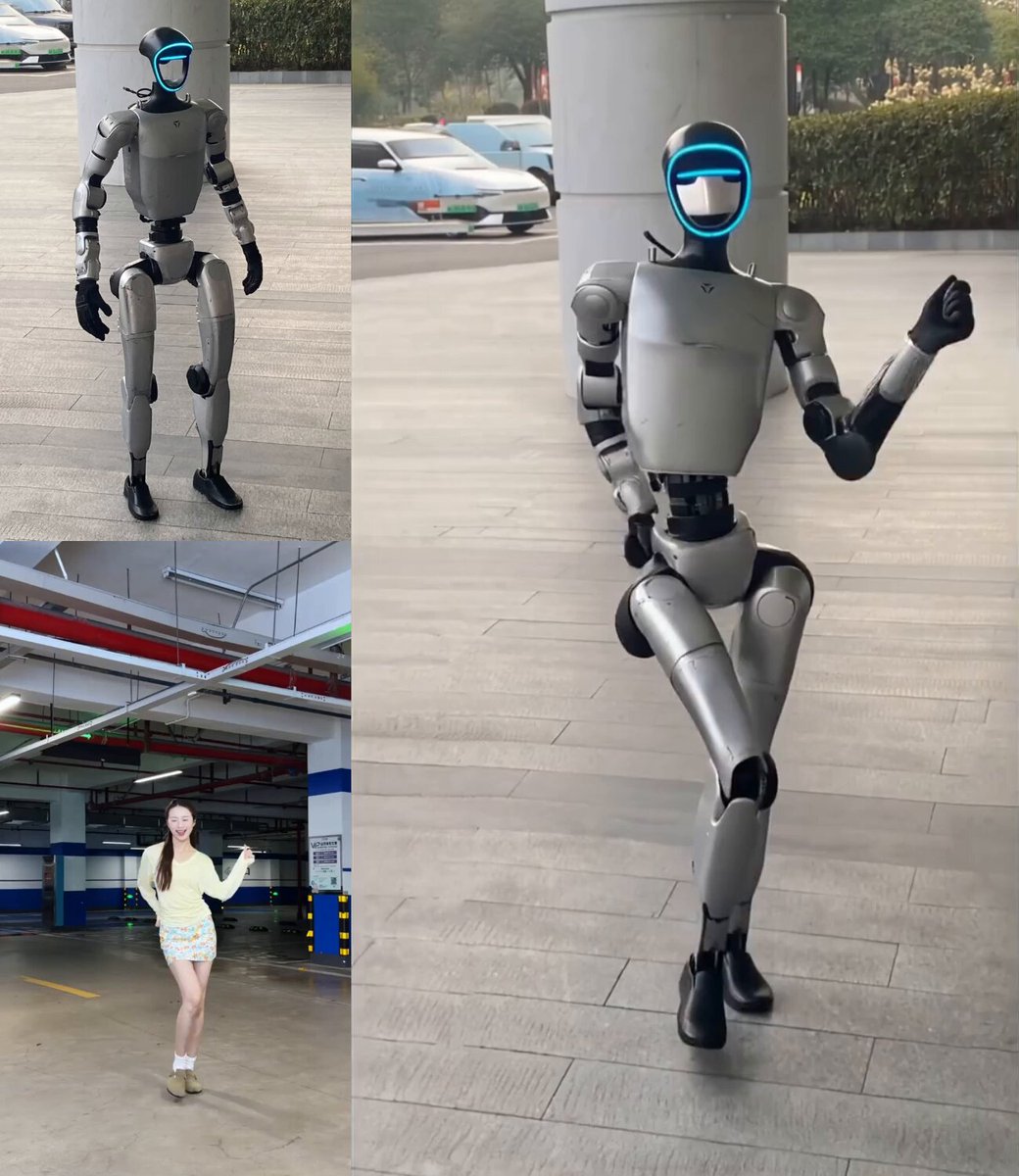
The architecture is worth understanding because the design choice is decisive. The reference video itself becomes the motion prior. Its latents feed directly into a dual-branch DiT at timestep zero, delivering clean motion keys and values to the denoising branch. A Time-Align RoPE mechanism puts reference and target tokens on a single temporal stream, which is what lets correspondence hold when input and output resolutions differ. Sparse-Ref Attention then ensures each target frame only attends to its temporally aligned reference tokens, cutting compute without sacrificing coherence. Per @Alibaba_Wan, this approach handles humans, cartoons, robots and animals with the same pipeline, and it retains distinct identities across multi-character scenes where every character is moving independently.
What this changes in a real workflow
If you have been animating AI characters with any rig-based tool, you will know the per-character setup cost. Every new species, art style or body proportion required a new skeleton profile. Wan Animate 2 removes that step at the extraction stage: you feed it a driving video and a reference image, and the model reads motion semantics without needing to know what a human skeleton looks like. That matters practically when your character is a stylised robot or a quadruped, where skeleton-based retargeting has always been weakest.
The text-driven camera control is a separate capability worth noting. You can specify a camera angle, such as "top view", independently of what the driving video's camera is doing. The camera instruction is decoupled from the motion reference, which means you can reframe a shot without re-shooting your driving footage. For iterative production this is a genuine time saving.
The Lite variant adds streaming generation: arbitrarily long sequences built chunk-by-chunk with, per Alibaba's own claim, no observable error accumulation across chunks. That is a strong claim and untested by this publication, but if it holds it closes one of the most annoying gaps in AI character animation, which is the hard length ceiling that forces constant re-prompting.
What was not said
No release date for a consumer or API endpoint was announced in these posts. The technical thread describes the architecture in research terms and links to what appears to be a model page, but pricing and access tiers are not stated. The posts show demo outputs for character fidelity and multi-character scenes, but there is no independent third-party benchmark comparison against competing systems such as Kling's character animation or any skeleton-based pipeline. Anecdotes from demo footage are not benchmarks.
The "no observable error accumulation" claim for long streaming sequences is Alibaba's own characterisation of Wan-Animate-2-Lite. Real-world sequences longer than a few seconds, with fast motion or scene cuts in the driving video, have not been tested publicly at the time of writing.
What to test first
For AI filmmakers, the clearest immediate test is cross-species retargeting: drive a cartoon or robot character from human motion capture footage and see whether the identity holds. That is the scenario where skeleton-based systems visibly break down, and it is the scenario Alibaba is specifically claiming to solve. If you are working with ensemble scenes, the multi-character test, two or more characters with distinct visual identities moving independently in a single generation, is the other proof point to push early.
Camera decoupling via text prompt is worth verifying on a shot you already have a driving video for. If it genuinely lets you specify "side view" or "overhead" without re-shooting, it removes a whole category of iteration cost from character-led sequences.
Wan Animate 2 is not a finished product announcement in the consumer sense. It is a technical release with demonstrated capabilities and, for now, limited public access details. But the architecture it describes, if it performs as shown in production conditions, represents a meaningful shift in how AI filmmakers will think about animating non-human characters.