Wan 3.0 has landed on Magnific, and its face-consistency demo holds a single character across 22 years and 13 scenes
Magnific has launched Wan 3.0 on its platform, leading with a proof-of-concept film that tracks the same face through three ages across 13 consecutive scenes. For AI filmmakers wrestling with character drift, this is the capability that matters most.
Magnific opened Wan 3.0 to its users on 24 August, and the team did not simply drop the model with a changelog. They made a film first. The demo holds a single face across 22 years of story time, spanning three distinct ages and 13 consecutive scenes, and then invited everyone to open the tool and try to do the same. That is a precise and deliberate choice of proof: character consistency across time is the problem that breaks most AI video workflows, and Magnific is stating plainly that Wan 3.0 is the thing that cracks it.
For working AI filmmakers, character drift has been the quiet tax on every project. You get two or three strong shots, then the face shifts by 10%, the hair changes colour, the body proportions move. Workarounds exist, but they all cost time: frame-locking reference images, running multiple generations to cherry-pick matches, splicing inconsistent takes together in the hope the cut hides the seam. A model that holds identity across 13 distinct scenes, across a character ageing from childhood to middle age, is not an incremental improvement. It removes a category of problem.
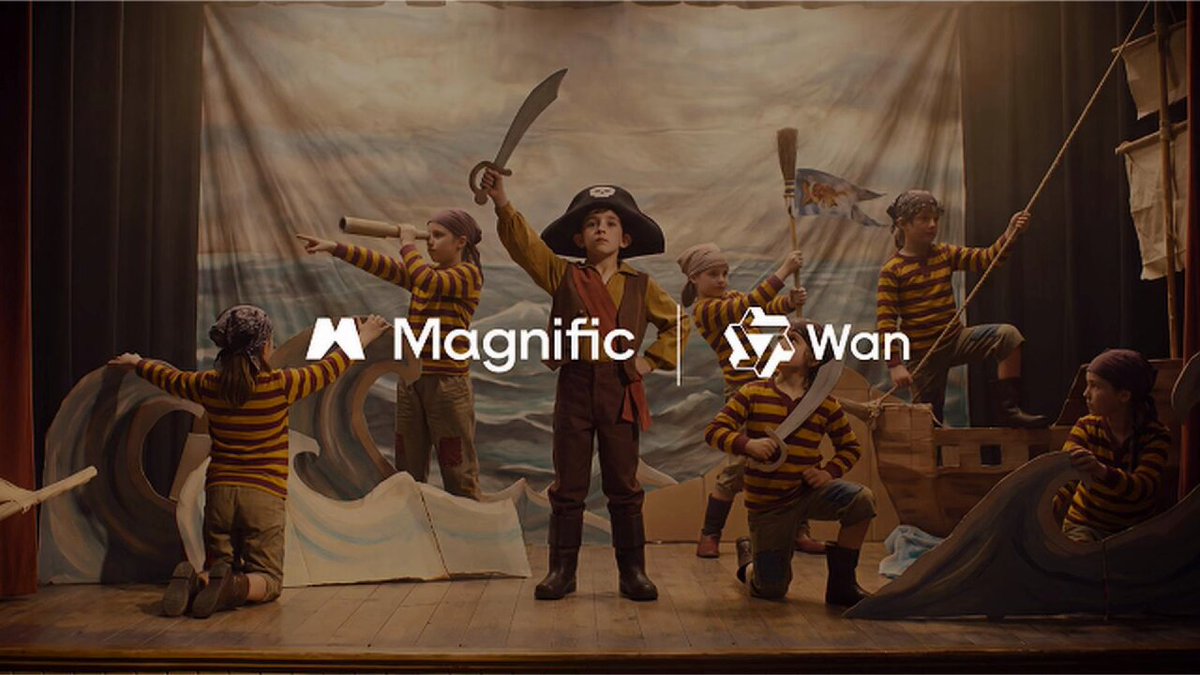
What Magnific says the model can do
According to the announcement from @magnific, Wan 3.0 on the platform can accept image, text, video, or audio references and maintain character and background consistency across that input mix. That last point, audio references feeding visual consistency, is the detail worth holding onto. Most reference pipelines are purely visual. If audio can contribute to identity anchoring, it opens a route for creators who have a voice or sound design already locked but are still building their visual assets.
The demo film itself is 22 years of story compressed into a short sequence with three ages and 13 scenes. No specific runtime for the demo was given in the announcement, and no technical breakdown of how the consistency is achieved has been published. These are things worth waiting to see.
What was not said
Pricing for Wan 3.0 generations on Magnific specifically has not been detailed in the launch post. The platform has its own credit system, and Wan 3.0 may sit at a different cost point than existing Magnific tools. Check the platform directly before planning a production budget around it.
No date has been given for when the launch offer or any introductory credits window closes. The announcement language suggests this is the general opening, not a limited beta, but that distinction is not made explicit.
Magnific has not published benchmark comparisons against Wan 3.0 running elsewhere, so the consistency seen in their demo may reflect their own prompt engineering and reference curation rather than a capability that transfers automatically to first attempts. A demo produced by the platform team is not a benchmark.
How this sits against the current alternative
Wan 3.0 was already available on other platforms before this launch. The question for a Magnific user is whether the platform's existing tooling, its upscaling, realism engine, and reference handling, adds something to Wan 3.0 that running the raw model elsewhere does not. The face-consistency demo suggests Magnific is positioning itself as the place to run Wan 3.0 when the output needs to survive editorial scrutiny, not just pass a quick scroll. Whether that positioning holds up across a real production rather than a curated demo is the open question.
For filmmakers not already on Magnific, the entry point is the demo film itself. Watch it, look for the frame where the model should have drifted and did not, and decide from that whether the consistency claim holds at the standard your project needs.
What to test first
Start with the hardest consistency case you currently fail on another platform: a character who appears in both a wide establishing shot and a tight close-up in the same sequence. If Wan 3.0 on Magnific holds that face across those two framings without a reference swap between shots, you have found a genuine workflow change. If it drifts on the close-up, the multi-reference input mode is worth testing next, feeding both image and audio cues simultaneously to see whether the combined signal tightens the lock.
The 13-scene demo is the baseline Magnific has set for itself. Hold them to it.