Kling 4.0 is coming in October with 4K HDR output, 15-reference Omni mode and a short film that shows what it can do
Kling AI has announced its 4.0 model with 4K 10-bit HDR output, stereo audio, tighter lip sync and a new Omni Reference system that accepts up to 15 simultaneous inputs. Ultra Yearly subscribers can already test the Flash variant, and the full release lands next month.
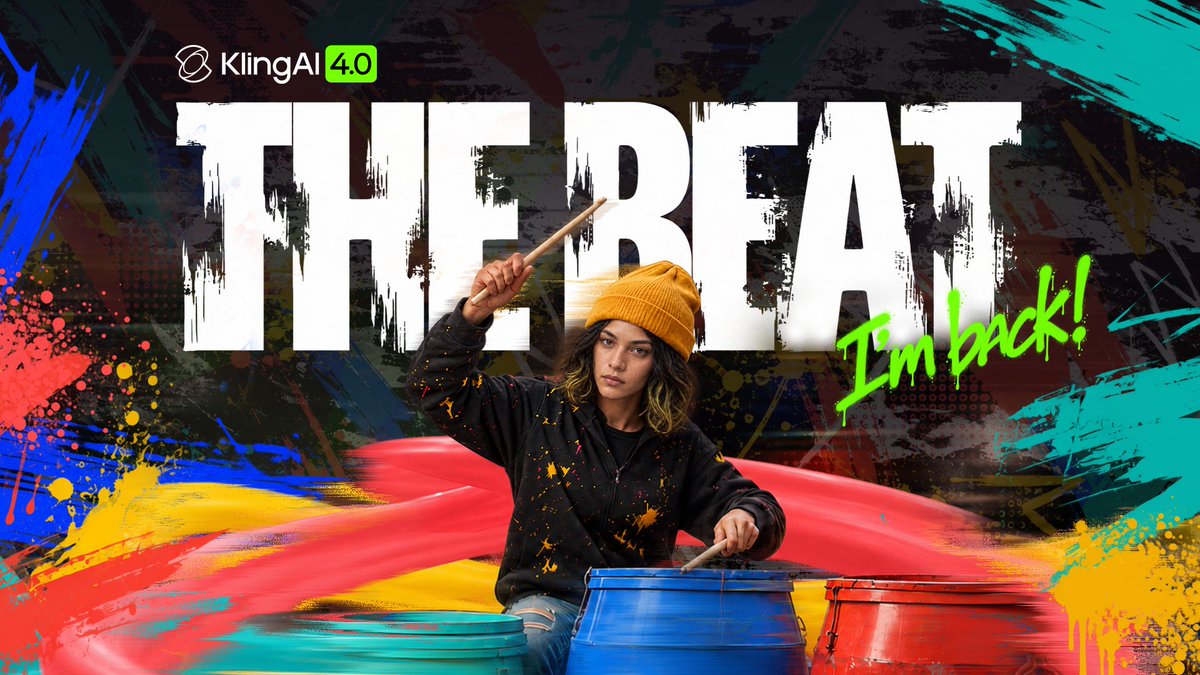
The drumbeat before a big model launch has become familiar in AI video, but Kling's approach this time is a little different. Rather than leading with a spec sheet, Kuaishou's team dropped a short film first. THE BEAT follows a drummer finding his way back to the stage, a deliberately human story rendered entirely inside Kling 4.0, and the footage is doing real promotional work. You can feel the creative ambition behind it before a single bullet point lands.
Then the bullet points land, and they are substantial. Kling 4.0 promises stable dynamic motion at up to 4K resolution with 10-bit HDR output, high-quality stereo audio baked in, and lip sync accuracy that Kling says is materially improved over 3.0. That last point matters more than it sounds. Lip sync failure is still one of the fastest ways to break believability in an AI scene, and anyone who has spent an afternoon trying to fix drifting mouth geometry in post will understand the appeal of getting it right at generation time.
What Omni Reference actually means for a working shoot
The headline capability beyond resolution is Omni Reference, which allows up to 15 multi-modal reference inputs in a single generation. The previous Kling reference system was useful but constrained: you could anchor a character or a scene style, but mixing references across character, costume, environment and motion simultaneously was messy. Fifteen inputs across modalities suggests Kling is building toward the kind of reference fidelity that keeps a character consistent across a full short film, not just a single clip.
The practical test will be whether those references stack coherently or whether the model begins to average them into incoherence above a handful of inputs. That is not something a spec sheet can answer. It is the first thing worth running a real experiment on when the full model drops.
What is live now versus what is coming
Kling 4.0 Flash is available today, but only for Ultra Yearly subscribers. The full Kling 4.0 release is scheduled for October, with no specific date announced. There is no pricing information yet for the new tier, and no detail on whether 4K generation will carry a premium credit cost or sit within existing plans. Anyone on a Standard or Pro subscription is waiting.
The post also references seamless camera control and enhanced video editing under the Omni Reference umbrella, but those details are currently truncated in the announcement. What is confirmed: 4K, 10-bit HDR, stereo audio, lip sync improvements, and 15-reference Omni mode. What is not confirmed: specific credit costs for 4K output, a precise October date, API availability, or whether the Flash variant in early access is limited in resolution relative to the full release.
How this sits against the current field
The combination of 4K HDR, native audio and a 15-input reference system in one model is a meaningful step. Runway and Sora have both pushed on resolution and motion quality this year, but native 10-bit HDR output at the generation stage is not something the other major consumer-facing platforms have shipped yet. For anyone building content destined for HDR displays, that removes a grading step that currently has no clean solution in AI pipelines.
The short film gambit is worth noting as a production strategy. THE BEAT is a competent piece of work with a clear emotional arc, and it functions as a benchmark clip in the same way that demo reels from Sora and Runway's earliest releases did. Watch it not just as marketing but as a map of where the model's strengths currently sit: motion, mood, music synchronisation. Weaknesses, if any, are easier to spot in long-form narrative than in a six-second showreel clip.
What to do right now
If you are an Ultra Yearly subscriber, run the Flash variant through whatever specific bottleneck has been most painful in your recent projects: lip sync on dialogue, costume consistency across a multi-clip scene, or a complex environment you have been referencing manually. Do that before the full launch so you have a baseline when 4.0 proper arrives.
If you are not on that tier, October is the relevant horizon. Keep the Omni Reference limit in mind when you are planning any project that will need consistent characters across multiple shots. If Kling delivers on 15 coherent simultaneous references, that changes the maths on how much pre-production work is worth doing versus how much you can delegate to the model at generation time.